Devotions in Preparation for Sunday, September 20th

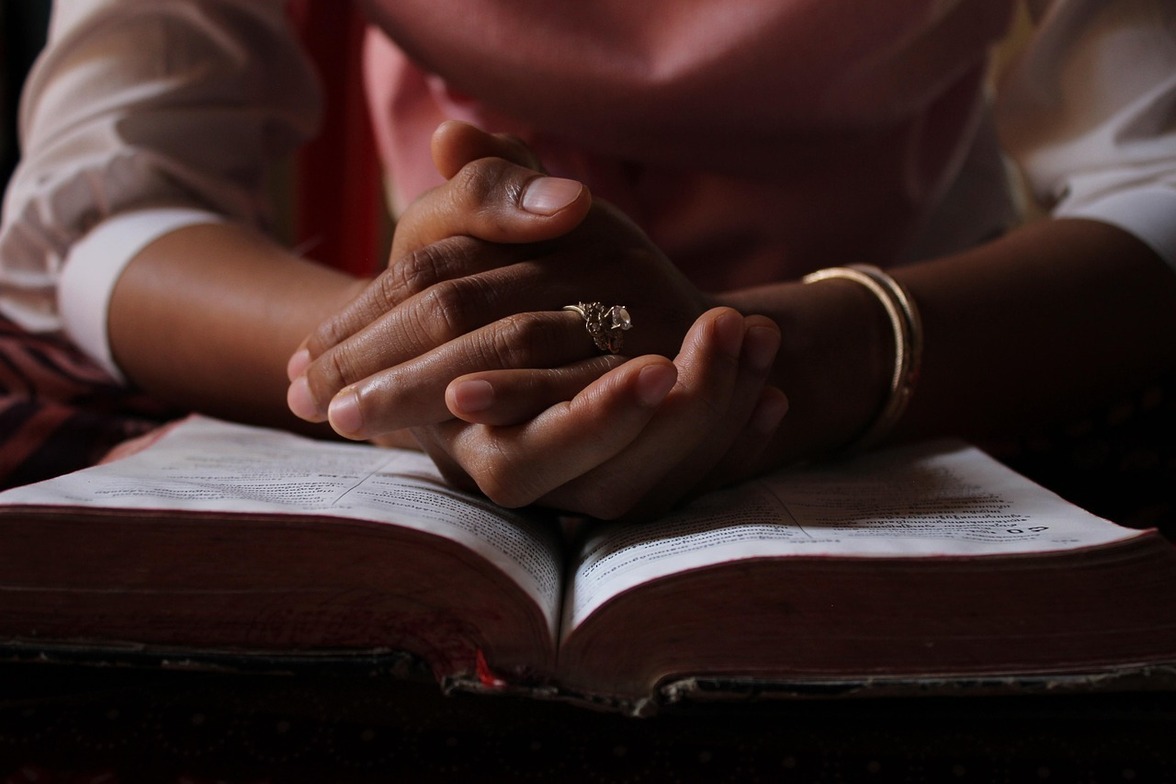
Read Exodus 16:2-15. In verse 5, we read, “On the sixth day, when they prepare what they bring in, it will be twice as much as they gather on other days.” It may be stating the obvious, but this instruction had to do with practicing sabbath. They were to gather and cook what they needed on the day prior to the sabbath so that everyone had a chance to rest, recharge, and reconnect with God.
This brings to mind the stories I have heard of Sundays past. It was often the habit of mothers and grandmothers (in days before men did much cooking!) to do all the cooking for Sunday dinner on Saturdays. After going to church, families would sit down to cold ham or chicken, salads, rolls, and dessert. Extended family and neighbors often came over for a visit or for cards. Sundays were not only for reconnecting with God through church, but they were also for reconnecting with family and friends.
How important is practicing sabbath in your life? How and when do you practice it? When you are resting or when you are with family and friends, how often do you consider it a time to draw you closer to God?
Offer a prayer of thanksgiving for those moments of rest and reconnection.
Read Psalm 105: 1-6,37-45. In this recounting of God’s deliverance of Israel from slavery in Egypt, we find words of praise for God’s steadfast covenant-keeping. Every covenant throughout the biblical story has two parts: “I will be your God, and you will be my people.” Throughout human history, we have failed to be God’s people. We have idolized the things of this world, we have put our own needs before those of our neighbors, we have insisted on our own way, and we have failed to forgive. Sometimes I think I’m doing a good job of being God’s person, but then I find myself judging someone or failing to recognize my part in a problem or ignoring someone’s pain.
The good news found in this psalm is that even when we don’t hold up our end of the covenant, God continues to do so, offering us abundant life, blessing us to be a blessing to others, and inviting us back onto the path of healing and restoration.
Say a prayer of confession and find assurance in the promise that God forgives you and offers a second (and third and fourth and fifth…) chance.
Read Philippians 1:21-30. In vs. 29, Paul writes, “For God has graciously granted you the privilege of not only believing in Christ, but of suffering for him as well.” The suffering Paul and many of his contemporaries did for Christ was real. Simply because of their faith, many were imprisoned, brutalized, or killed, often in the most tortuous way possible. We may wonder how Paul could possibly have viewed that as a privilege. And yet, he found joy in his faith as he saw the values of God’s kingdom being enacted, as these Christian communities formed around the shared purpose of living as Jesus lived and taught. He celebrated the fruit of faith that was being shown in these communities: unity, peace, equity, mutual accountability.
To what degree do you suffer for your faith? Are there places in which or people with whom it is harder for you to live according to the core value of Christian love? What does it look like to stand firm in your faith, while still showing gentleness and humility?
Today, offer a prayer of thanks for those who were willing to suffer for their faith so that you may practice yours freely and without fear.
Read Matthew 20:1-16. This is one of the most difficult of Jesus’ parables to unpack, partly because in this world, it seems so unfair. We naturally identify with those who were hired early in the morning, worked through the heat of the day, and found themselves thrilled at the idea of being paid more than they had been promised. We understand their grumbling. The mistake we make here is thinking that Jesus is talking about this world. Instead, we must remember that Jesus is talking about a different world – a different kingdom – the kingdom of God. Notice that the person in the position of hiring and rewarding is referred to as “landowner” up until his conversation with the grumbling workers. In that exchange, he calls them friends.
In his commentary on this passage, David Lose says this: “I think this parable invites us to imagine that for any conversations about fairness to have meaning, we have to start with relationships… We enter into these conversations recognizing that we will fall short. That our biases and preconceptions and lack of understanding and inherited fears will all get in the way. That even when we operate with good intentions, we’ll make mistakes.
But thankfully, this strange, hard, and important parable reminds me that, at the end of the day, it’s actually not about deserving, but rather about being known and accepted and loved and redeemed, not because of who we are or what we’ve done or not done, certainly not because of the color of our skin, our accomplishments or lack thereof. But simply because that’s who Jesus is – the one who surrenders all titles and claims and calls us – each of us – ‘Friend,’ and then invites us, first, to see those around us as friends and fellow children of God and, then, to work for the world of equity God desires, praying as we go, ‘thy kingdom come, thy will be done, on earth as it is in heaven.’”
May that be our prayer today.